Start with a smaller decision
Choosing a cuisine first gives the restaurant round a clear boundary and keeps an open-ended discussion moving.
A group dining app that turns an open-ended conversation into two simple rounds of voting. Choose a cuisine, compare restaurant options, and arrive at a shared result.
 Opening Yoli…
Set up a group, vote on cuisines, and choose from illustrative restaurant options. The complete two-round flow runs on one shared device.
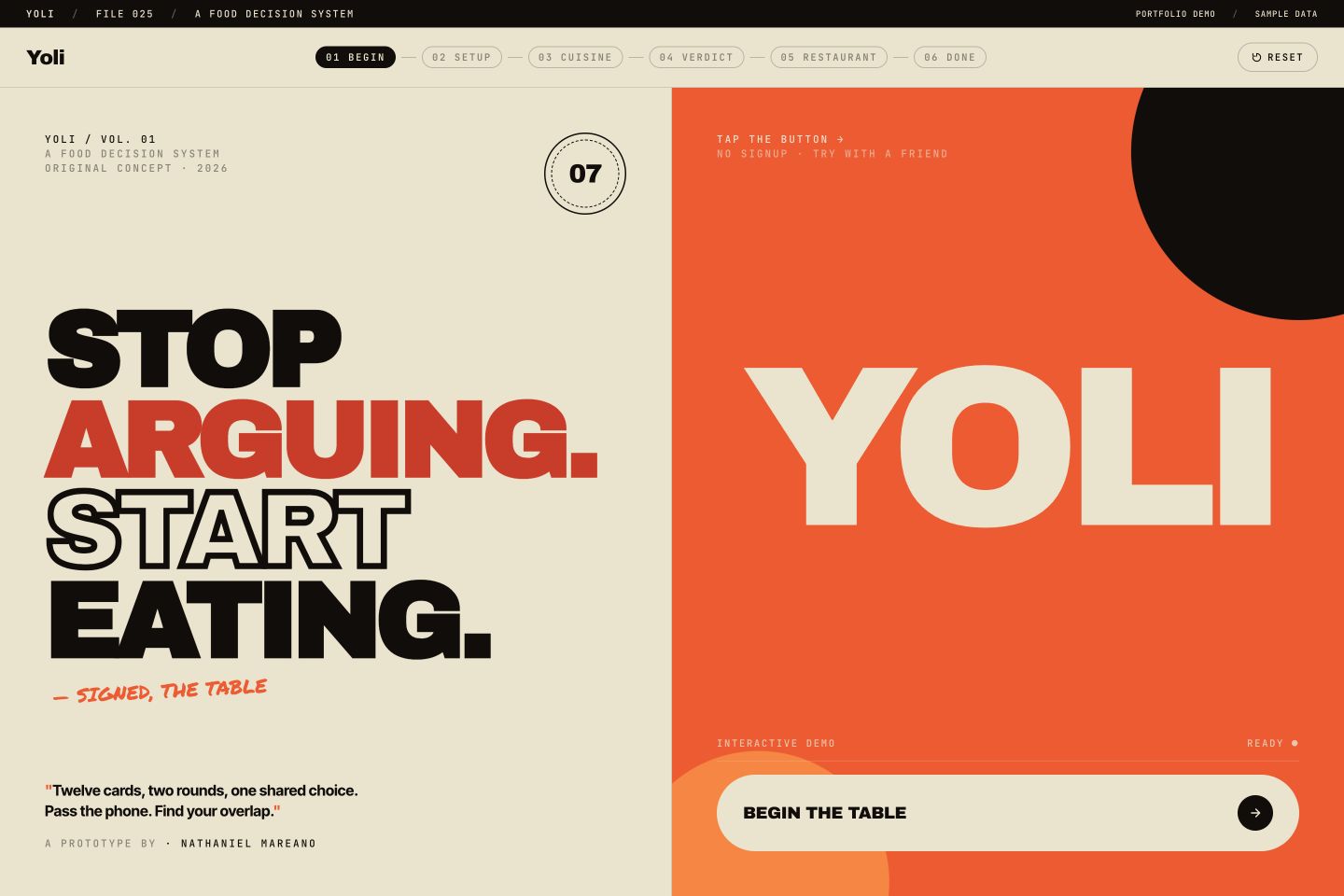
Actual screens from the Yoli prototype, captured October 22, 2026. Restaurant names, ratings, and details in this demonstration are illustrative sample data.
I built Yoli around a familiar problem: a group wants to go out to eat, but nobody wants to make the final decision. More options can make that conversation harder to finish.
My approach was to make the choice smaller and give everyone the same way to participate. People vote on cuisines first, then on restaurants in the selected cuisine. The group moves toward a result one decision at a time.
Add one to eight people on a shared device. No account or installation is needed for the demonstration.
Each person votes on the same twelve cuisine cards, then passes the device to the next person.
The winning cuisine opens a second round with four sample restaurant cards.
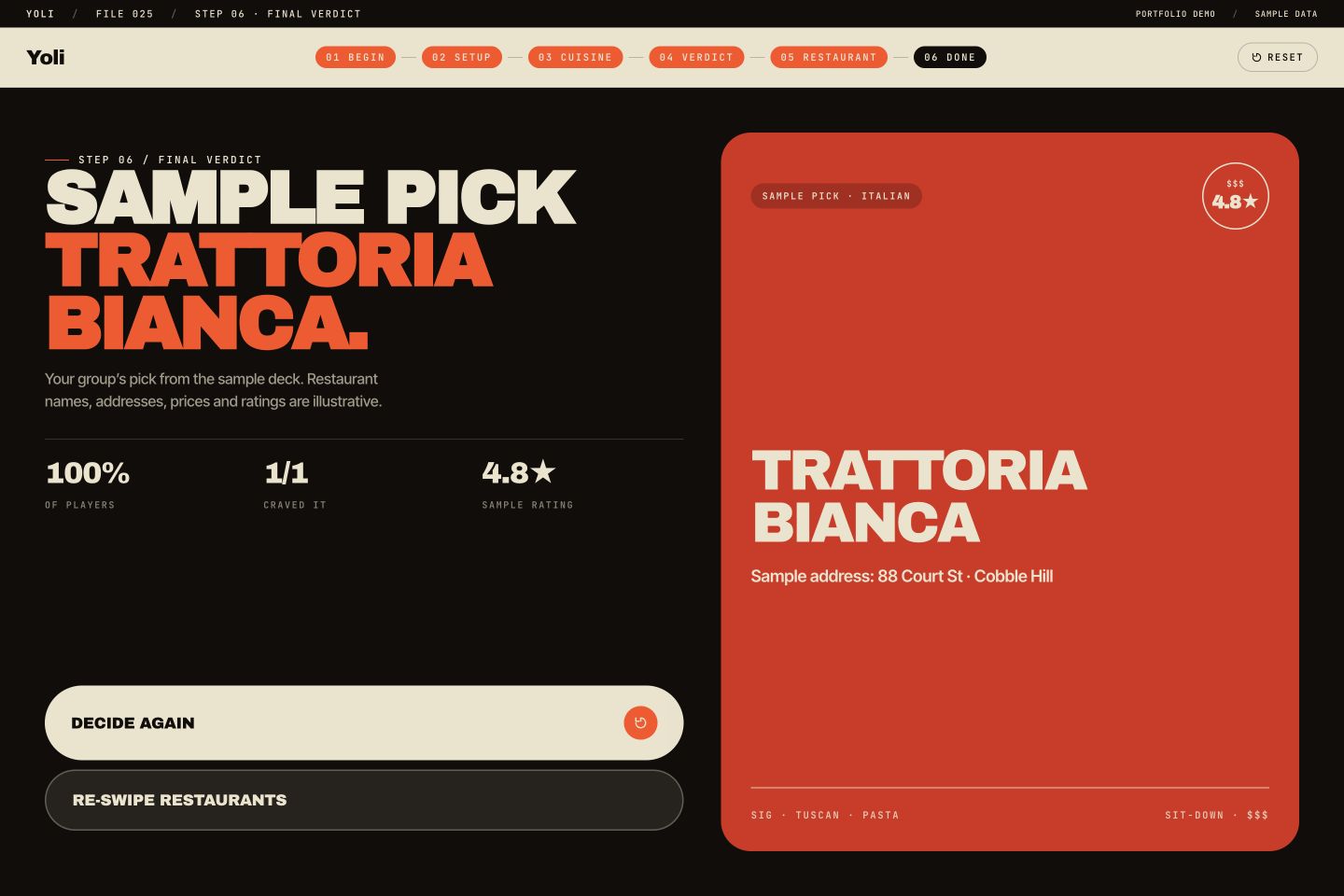
The final screen shows the shared choice and vote counts, with clear paths to retry or start over.
Actual screens, with the reasoning beside them
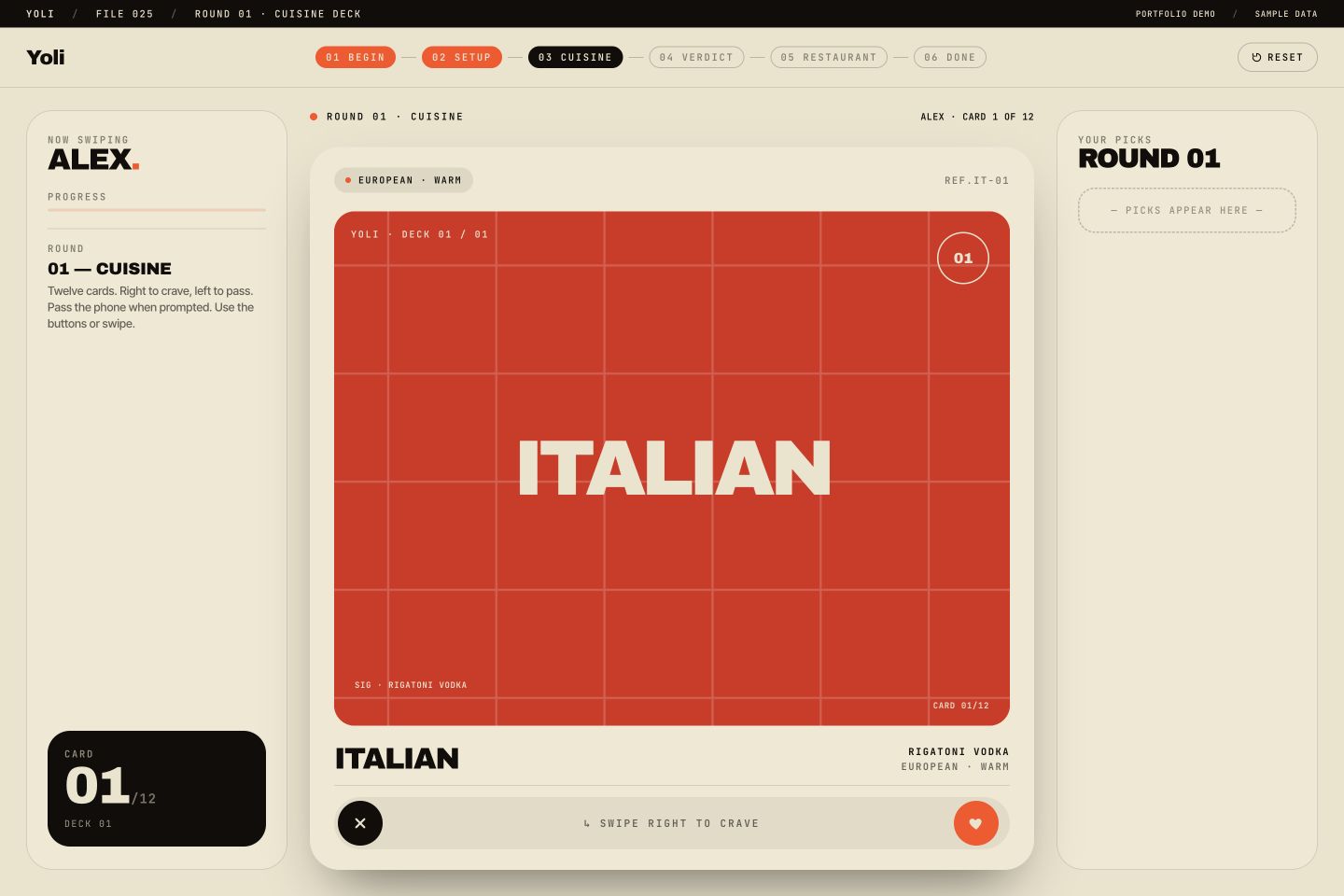
Each cuisine is presented as a single, expressive card. Swipe or use the voting buttons, then move to the next option. The current player and round progress stay visible.
The interaction keeps the group focused on one choice at a time. A handoff screen separates each person’s turn without requiring everyone to join on another device.
A second round moves from cuisine preferences to a specific restaurant choice. The result shows the vote totals so the group can see how it arrived there.
If everyone passes, Yoli says there is no winner. If positive results tie, it explains the original deck-order rule. Those outcomes matter because a decision tool should not manufacture agreement.
Choosing a cuisine first gives the restaurant round a clear boundary and keeps an open-ended discussion moving.
A shared-device handoff makes participation easy for a group already sitting together.
Bold typography, graphic food cards, and direct language make the voting feel approachable and playful.